Mold Handling Crane
Product Description
Single Girder Overhead Crane for Die Handling & Mold Handling — Enhanced Product Description
| Single Girder Overhead Crane for Die Handling & Mold Handling | ||||||
| Series | Model | Capacity (t) | Span (m) | Lifting Height (m) | Work Duty | Ambient Temperature |
| Standard Single Girder Overhead Crane | LD | 1–32 | 7.5–28.5 | As Required | A3 / A4 | -20°C ~ +40°C |
| European Single Girder Overhead Crane | HD | 1–30 | 7.5–31.5 | ≥6 | A5 | -25°C ~ +40°C |
| Low Headroom Single Girder Crane | LDP | 1–32 | 7.5–22.5 | As Required | A3 / A4 | -20°C ~ +40°C |
| Explosion-proof Single Girder Crane | LB | 1–20 | 7.5–28.5 | As Required | A3 | -20°C ~ +40°C |
| Monorail Crane | MR | 1–20 | Customized | As Required | A3 / A4 | -20°C ~ +40°C |
| Common Technical Specifications | |
| Parameter | Specification |
| Crane Type | Single Girder Overhead Crane |
| Application | Die Handling & Mold Handling |
| Hoist Type | Wire Rope Hoist / European Hoist |
| Control Method | Pendant / Wireless Remote / Cabin |
| Power Supply | 380V / 50Hz / 3 Phase (Customizable) |
| Protection Class | IP54 / IP55 |
| Insulation Class | F |
| Design Standard | FEM / DIN / ISO / GB |
| Optional Features | Low Headroom, VFD, Anti-sway, Explosion-proof |
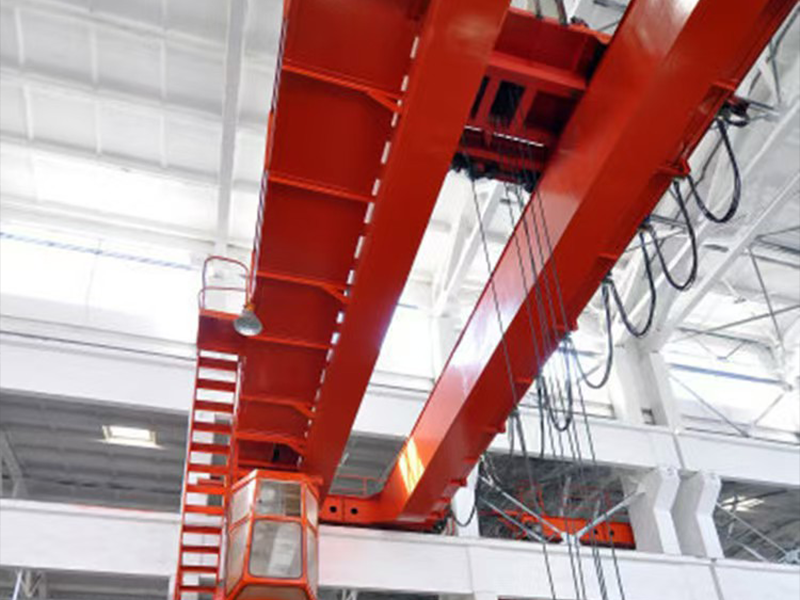
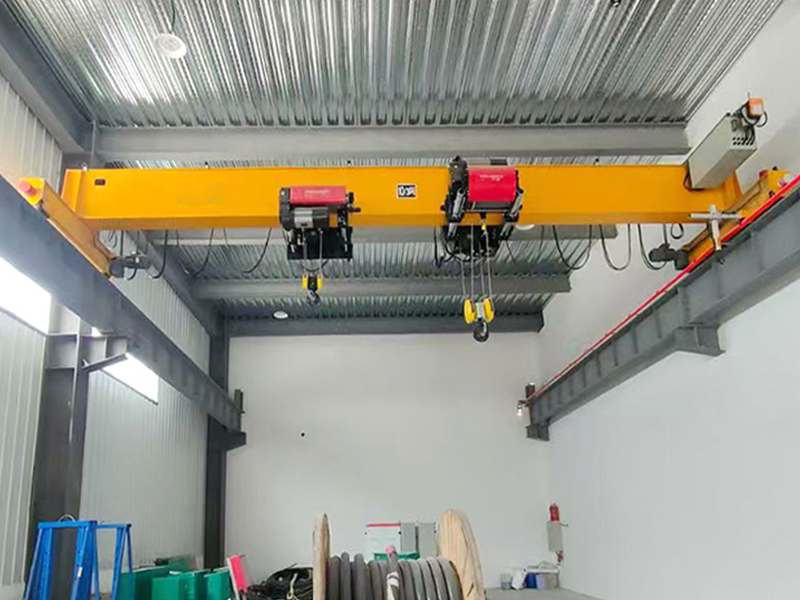
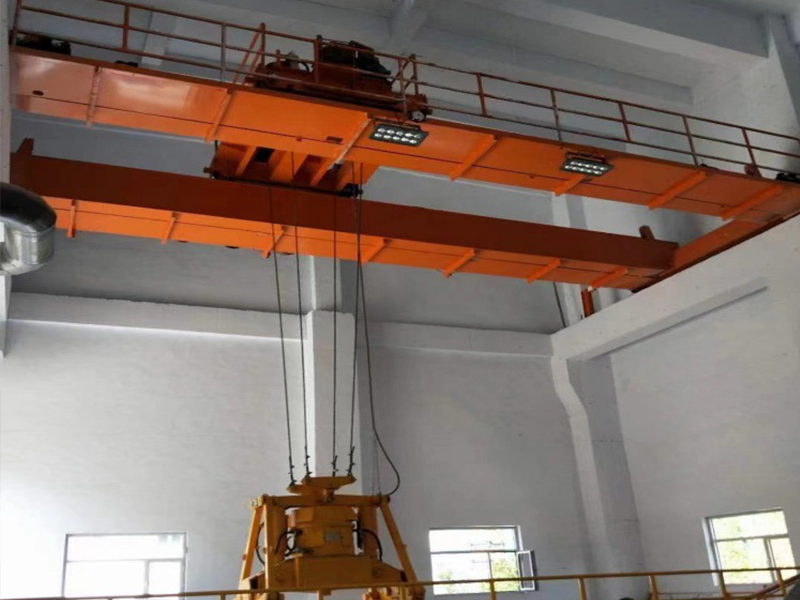
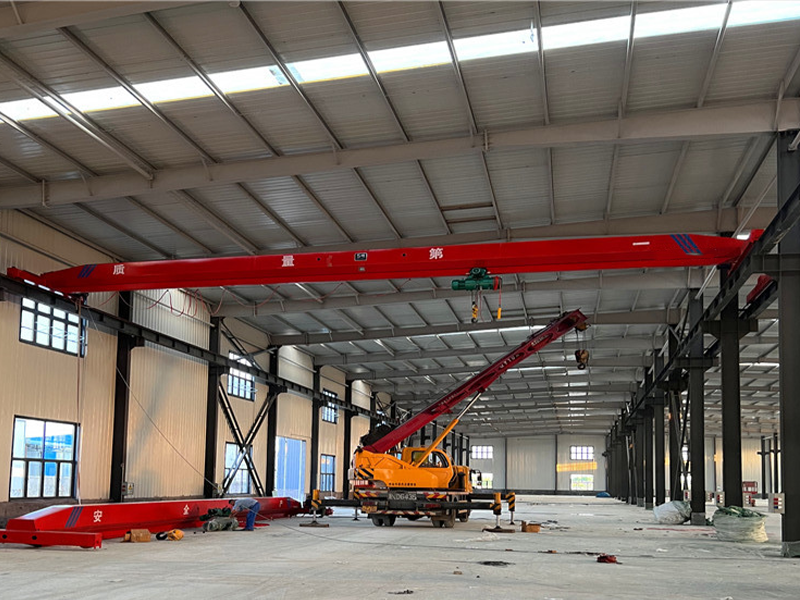
The Single Girder Overhead Crane for Die Handling and Mold Handling is designed to provide efficient lifting and positioning of light to medium-duty dies, molds, and tooling. The single-girder structure reduces the overall crane weight while maintaining sufficient rigidity for daily production. According to different workshop layouts and production requirements, the crane can be supplied in top-running, under-running, low headroom, European-style, explosion-proof, and monorail configurations. This flexible design allows users to select the most suitable solution for mold manufacturing, stamping workshops, injection molding plants, and maintenance facilities.
| Single Girder Overhead Crane Series Comparison | |||
| Series | Design & Components | Key Features | Typical Applications |
| LD Series | Box girder structureEnd trolleysCD/MD electric wire rope hoistCrane traveling mechanismElectrical control systemStandard safety devices | Cost-effectiveSimple structureEasy installationEasy maintenanceReliable operation | Mold manufacturingMachining workshopsTooling warehousesMaintenance workshops |
| HD Series (European Type) | European box girderLow headroom wire rope hoistCompact trolleyEnd carriagesElectrical control system | Compact designOptimized headroomSmooth travelEfficient space utilization | Injection moldingAutomotive manufacturingPrecision toolingModern production lines |
| LDP Series (Low Headroom) | Offset box girderSide-mounted wire rope hoistEnd carriagesTraveling mechanismElectrical control system | Increased lifting heightSpace-savingCompact structureStable operation | Low-clearance workshopsMold maintenanceAssembly plantsWarehouses |
| LB Series (Explosion-proof) | Explosion-proof wire rope hoistExplosion-proof motorsExplosion-proof electrical componentsSingle girder structureSafety protection devices | Explosion-proof designReliable performanceStable operationIndustrial safety | Chemical plantsPetrochemical facilitiesOil & gas plantsHazardous areas |
| Monorail Crane | Monorail beamElectric hoistTraveling trolleyElectrical control system | Compact layoutFlexible routingSimple installationEfficient linear transport | Mold transferAssembly linesMachining centersMaintenance areas |
Frequently Asked Questions
1. What lifting capacity is available for a single girder overhead crane?
Our single girder overhead cranes are available in capacities from 1 ton to 20 tons for die and mold handling applications. The appropriate capacity depends on the mold weight, lifting frequency, and working conditions.
2. What is the difference between a top-running and an under-running crane?
A top-running crane travels on rails mounted above the runway beams and is suitable for higher lifting capacities. An under-running crane is suspended beneath the runway structure, making it a practical solution for workshops with limited building support or lower installation costs.
3. Which hoist is recommended for die and mold handling?
Electric wire rope hoists are commonly used because they provide stable lifting, smooth positioning, and reliable performance. European low-headroom hoists are recommended when maximum lifting height is required.
4. Can the crane be customized for different workshop layouts?
Yes. The crane can be customized with different lifting capacities, spans, lifting heights, control methods, power supplies, and optional configurations such as low headroom, explosion-proof, or European-style designs.
5. What industries use single girder overhead cranes for die handling?
These cranes are widely used in mold manufacturing, injection molding, automotive production, stamping workshops, tooling warehouses, and maintenance facilities where accurate and efficient die handling is required.
6. How do I choose the right single girder overhead crane?
When selecting a crane, consider the maximum mold weight, span, lifting height, duty class, workshop dimensions, and operating frequency. Our engineering team can recommend a suitable configuration based on your application requirements.